officebanao
·
Workspace Interiors Tech
·
2025
Workbench MVPs: Payments, MEP BOQ & Designboard
Video not loading? Sign into YouTube, then refresh. Direct link
Overview
Officebanao, founded 2021 in Gurugram, is an Indian B2B proptech startup delivering end-to-end office interiors via AI-driven design, 3D walkthroughs, real-time collaboration, and supply chain tech.
Workbench is an Internal B2B platform for sales, design, procurement, and finance teams managing leads, BOQs, vendors, and project execution.
As Product Designer , I designed lean MVPs to test new capabilities: Vendor SOA for financial reconciliation, Payment Milestone , MEP BOQ procurement integration , Designboard revamp.
[Role]
Product Designer
[Team]
1x Product Manager , 1x Designer , 4x Engineers
[Impact]
Shipped 3 Workbench MVPs accelerating payment approvals 30%, aligning Designboard for architects, and syncing BOQ to procurement workflows.
[Timeline]
June 2025- November 2025
Problem & Context
Critical gaps blocking revenue
Workbench was already used daily, but evolving business needs exposed gaps in money visibility, consultant alignment, and how teams presented designs for clients :Money visibility : Finance lacked single-view vendor reconciliation (spreadsheets prevailed) Consultant alignment : BOQ disconnected from procurement workflows Design evolution : Moodboard needed canvas-based presentation for long-term scalability Designboard , showed promise but was deprioritized due to some blockers
Design Goals
Design Evolution
Defining MVP Scope & Approach :
Started by balancing long-term scalability with immediate business needs for each MVP:
Designboard : New canvas module built on existing Moodboard visioned as future standalone tool
Vendor SOA, Payment Milestones, MEP BOQ : Immediate (P0) needs designed to integrate seamlessly with live Workbench without disruption
Each MVP had distinct timelines and constraints, ensuring rapid delivery while preserving system stability.
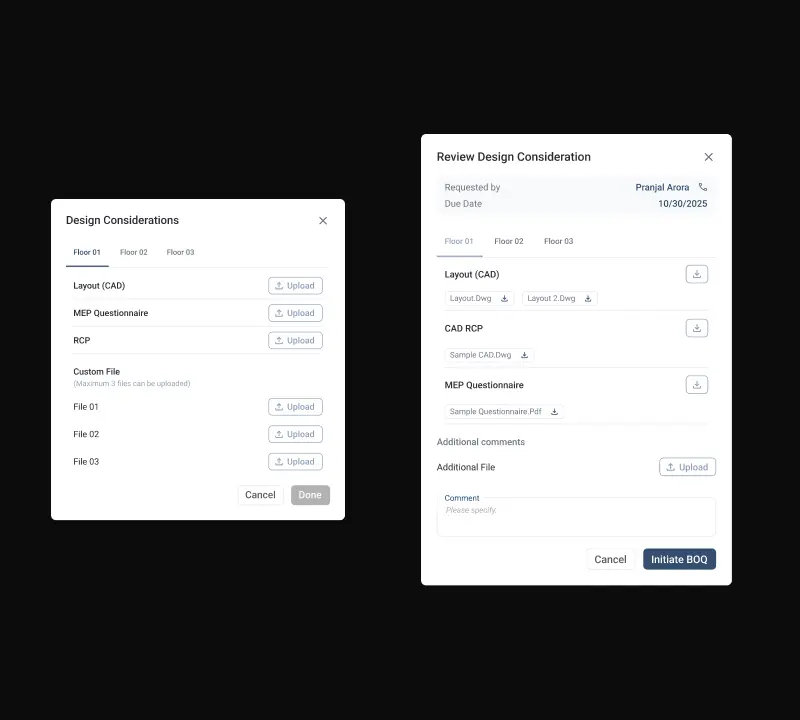
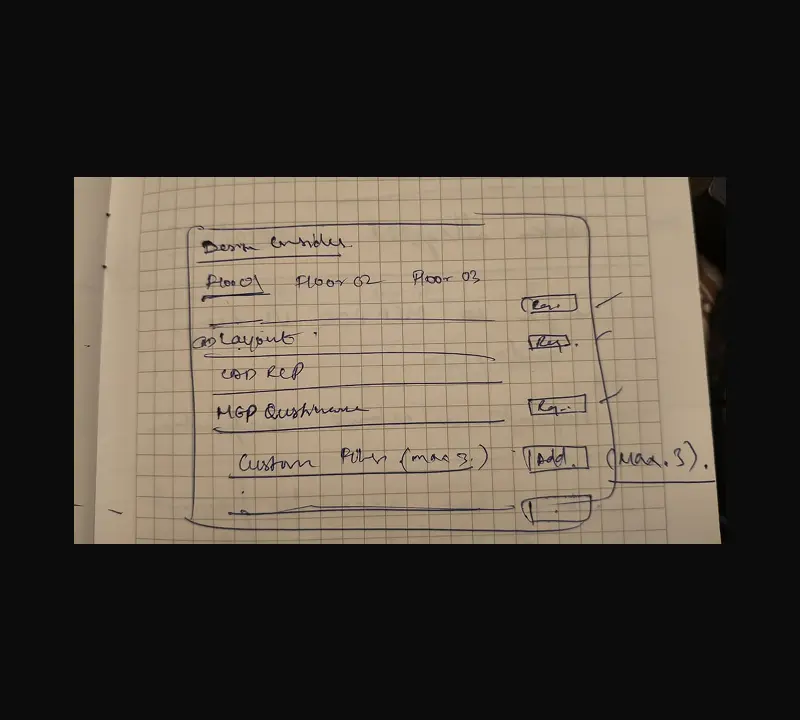
[ Paper wireframe → Final UI of a Modal in MEP BOQ]
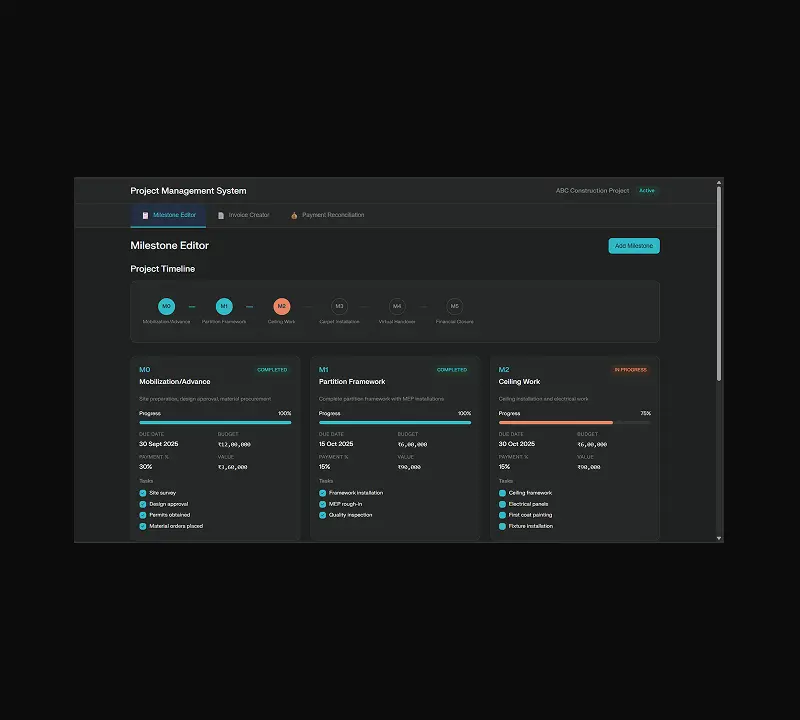
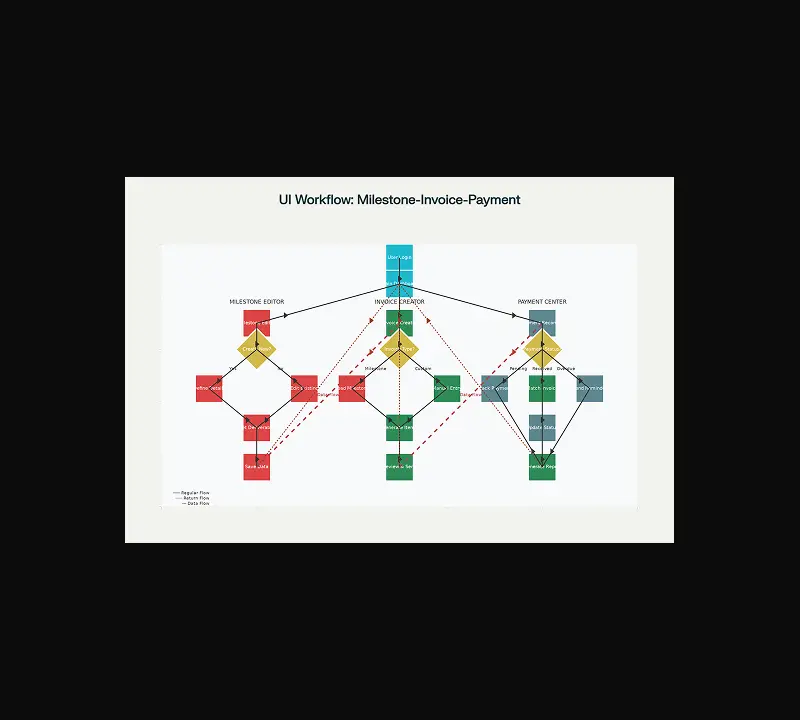
[ Flow Diagram → Initial proto payment milestone for testing using Perplexity Labs ]
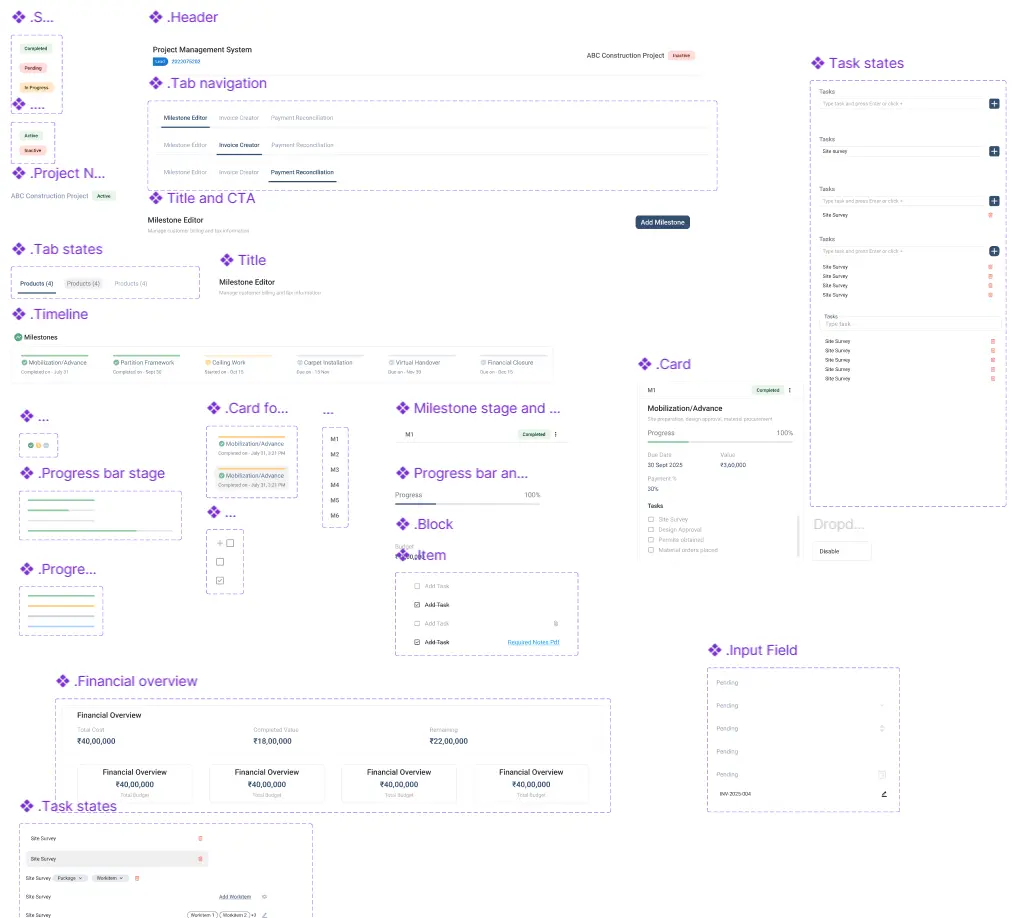
[ Brief look at Atomic Design for Payment milestone feature]
Design Decision 01
MVP Scope & Prioritization
Challenge: Limited engineering bandwidth, live system constraintsOption: Highest business priorities (finance, procurement) needed immediate solutions, thus we opted towards MVPs (quick validation, low risk)Result: Vendor SOA, Payment Milestones, MEP BOQ was shipped vs. Designboard revamp was deprioritized
Video not loading? Sign into YouTube, then refresh. Direct link
[ Happy flow when shape tool is used to create the workspace on layout ]
Design Decision 02
Reusable Patterns
Challenge: Design new flows without inventing new patterns, to keep Workbench predictable for daily users.Option: Reuse + evolve existing patterns (speed + consistency) , MVP scope demanded rapid testing, not system overhauls. Existing Workbench covered 80% of needs.Result: Delivered the BOQ MVP that gave external consultants and procurement a shared view, built mostly from existing components.
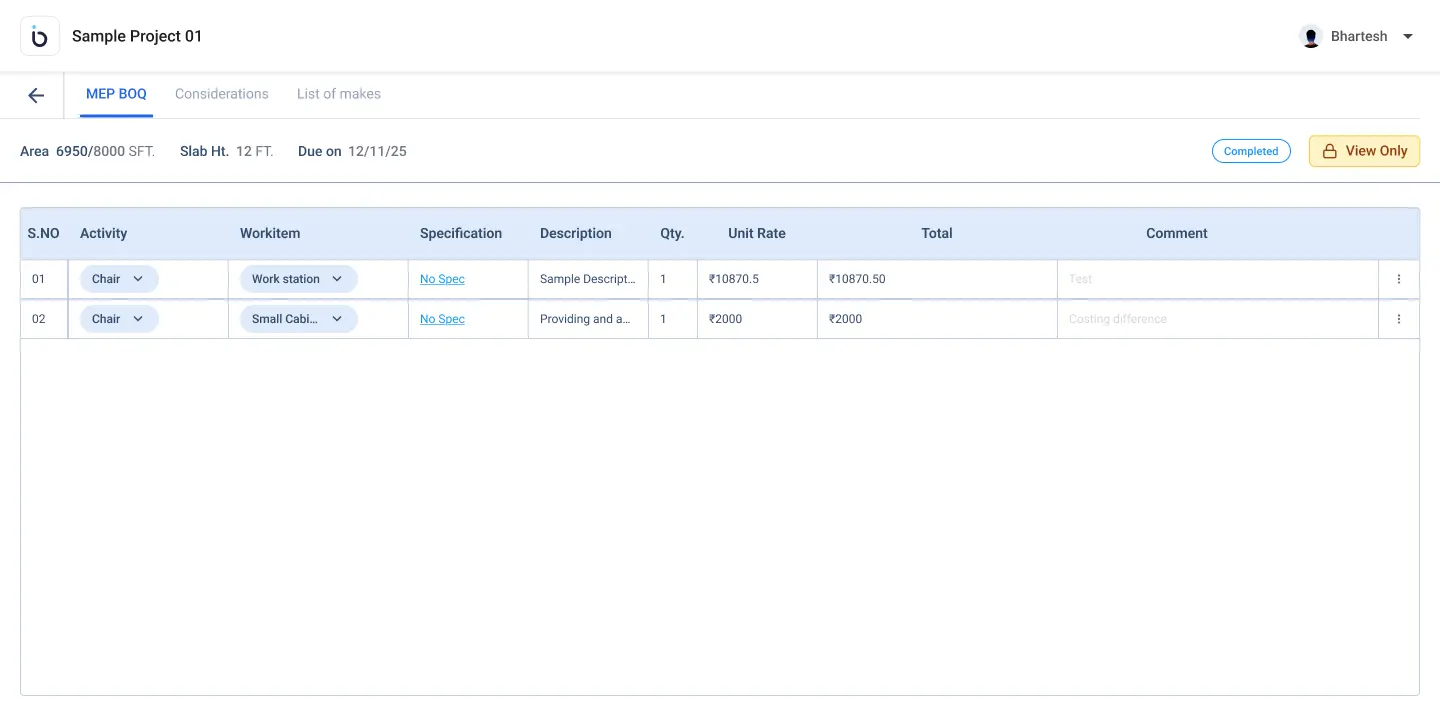
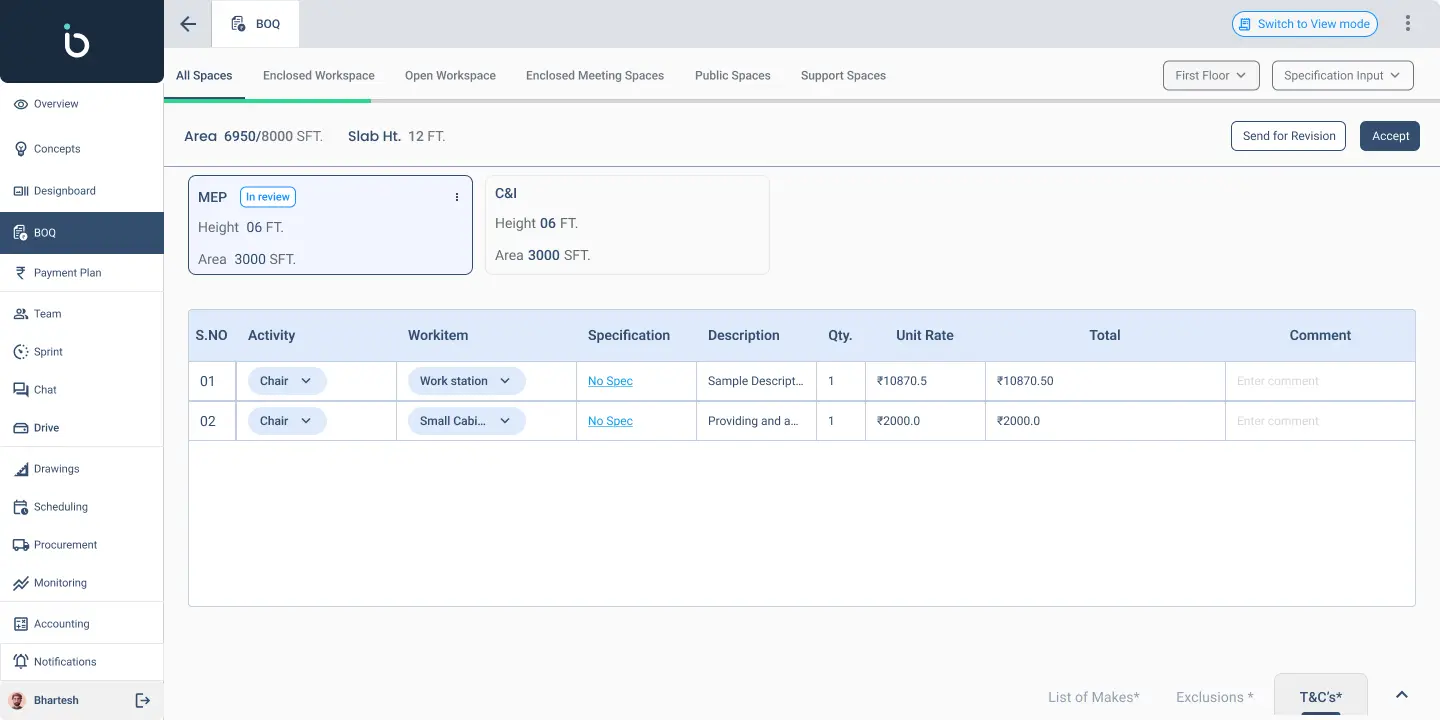
[ Review request UI and completion screen in Procurement portal using the existing live structure to avoid rebuilding in MVP scope ]
Retrospective
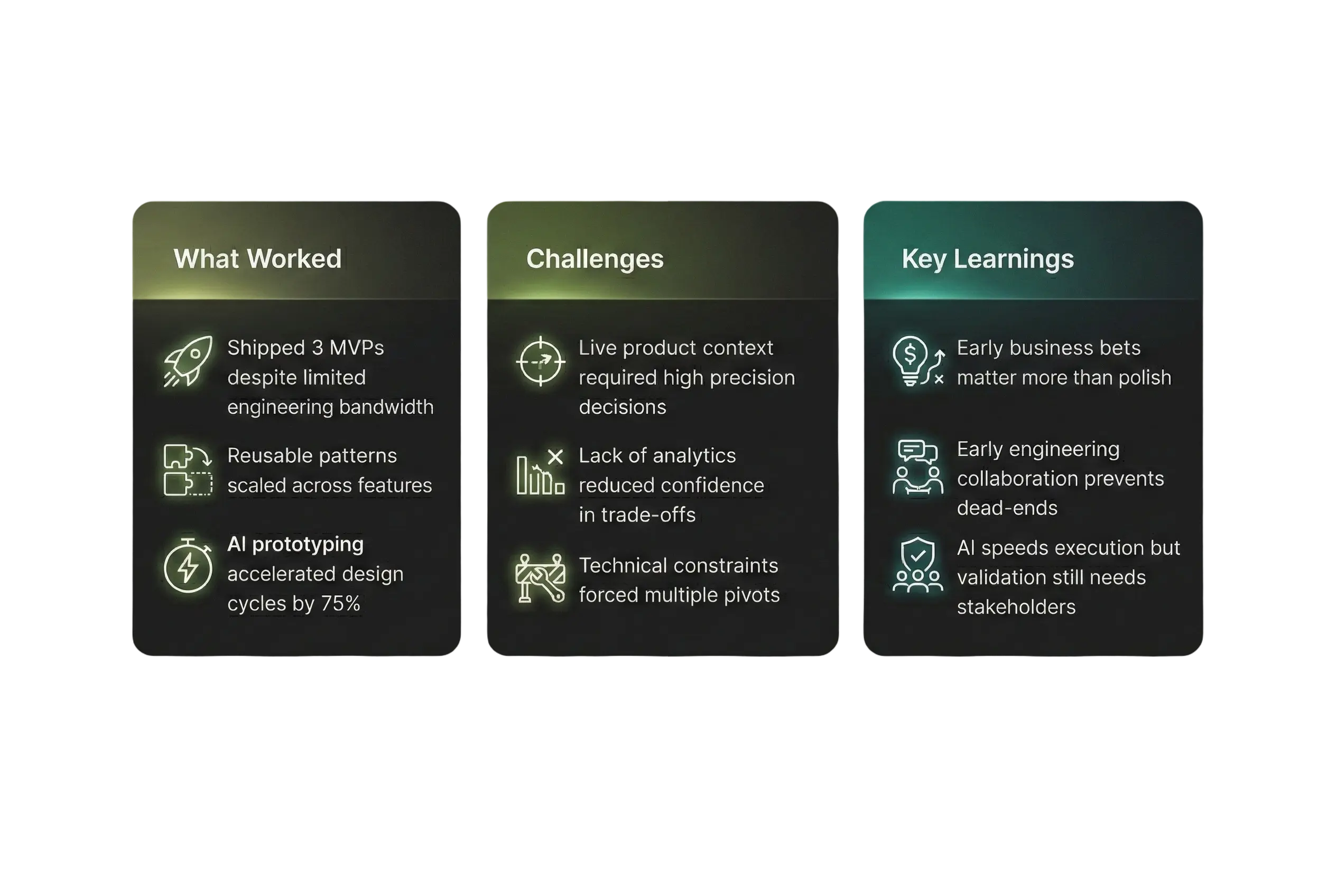
Shipping MVPs in a live B2B platform taught me to balance speed, constraints, and business impact:
• Prioritize immediate business needs over speculative features
• Design within live systems, not against them
• Use AI to prototype 10x faster, validate with domain experts
This MVPs were build on Workbench: Internal UX Improvements, where core navigation, tables, and modals were first redesigned.
Ownership & Rights Statement
All content, designs, and solutions presented in this case study are the intellectual property of OfficeBanao (Swash Tech Solutions Pvt. Ltd.). The work showcased reflects my contributions as a product designer; however, the rights to the project, its development, and all related materials belong solely to the company.
See also
©2026 Now
by Bhartesh Kataria